How to Fly a Loop: The Manoeuvre, Step by Step
How to fly a loop, explained step by step: the entry, the pull, the float over the top, and what each moment feels like from the Extra 300.
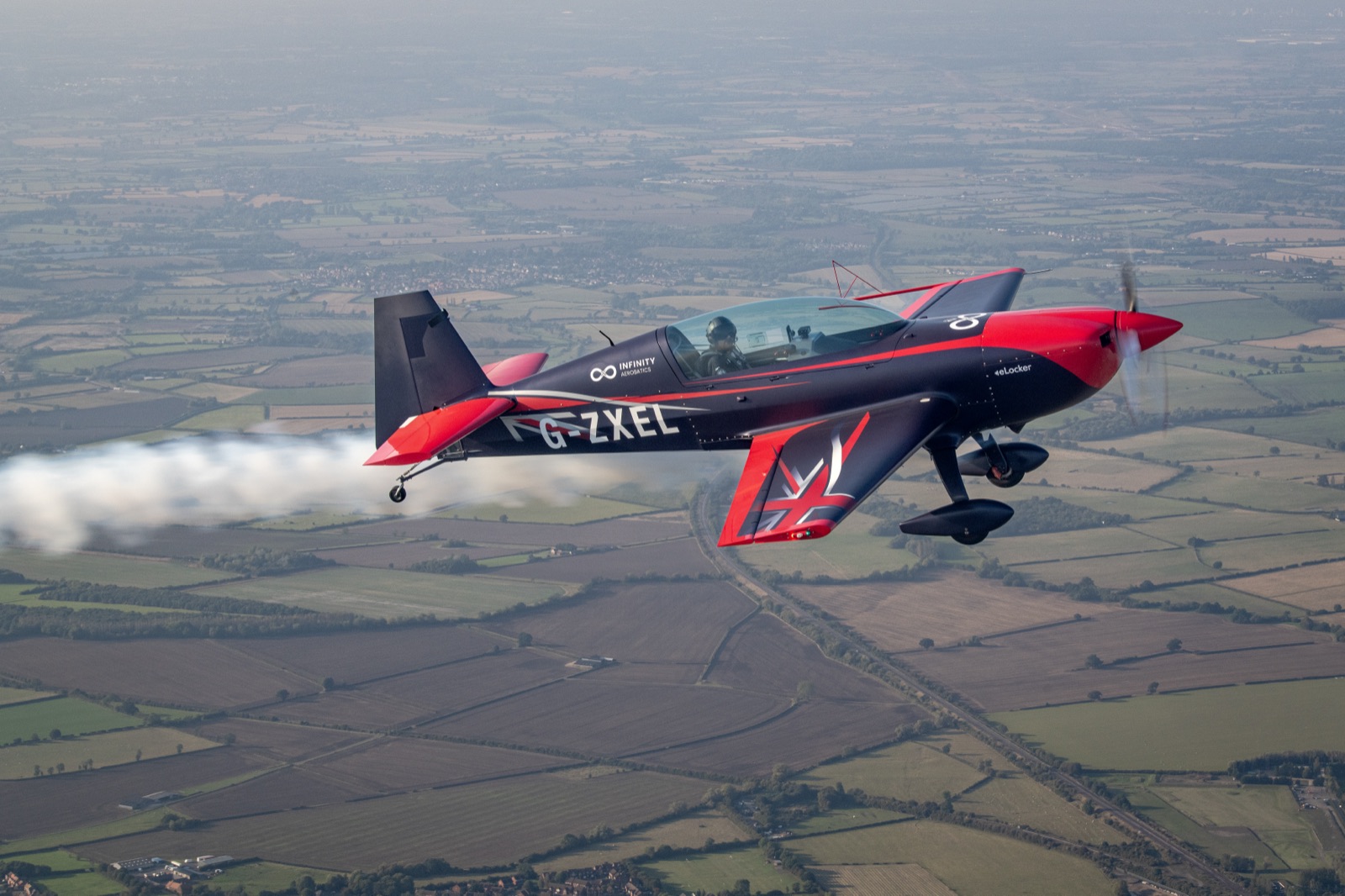
The loop is the figure everyone pictures when they imagine aerobatics. A great vertical circle drawn in the sky. It is also the first proper manoeuvre most pilots learn, because almost everything else builds on it. Understanding how to fly a loop, and fly it round, is the foundation of the whole craft.
This is an explainer, not solo advice. A loop is flown with a professional pilot beside you in an aircraft built for it. It is never something to attempt alone or in an aeroplane that is not certified for aerobatics.
Why the loop comes first
Behind its simple shape, a good loop asks a lot of the pilot. Speed, back pressure, balance and sightlines all have to be managed in sequence, and the aircraft is changing energy the whole way round. Get the loop dialled and you have the core skills for half the aerobatic catalogue.
It is also, from the seat, one of the most satisfying things you can feel an aeroplane do, which is why it sits near the top of nearly every list of must-try aerobatic manoeuvres.
How to fly a loop, step by step
Here is the shape of it, from entry to exit. In the Extra 300 the numbers below are typical; your pilot will talk you through the same sequence in the air.
-
Set the entry. Ease into a shallow dive of around 45 degrees to build energy, then level off and let the speed settle. In the Extra 300 you are looking for roughly 150 knots (about 2.5 times the stall speed) before you begin.
-
Pick your references. Hold level for a couple of seconds, note your height and a landmark straight ahead, then glance out to the left wing so you can watch where it cuts the horizon. Those sightlines are how you keep the figure honest.
-
Start the pull. Ease the stick back, wings level, and pull around 4G to set the radius in the first quarter. This is the firm, planted part of the loop: the pull that presses you into the seat.
-
Float over the top. As the speed bleeds off into the second quarter, relax the back pressure and let the radius stay smooth and even. At the apex the aircraft is barely flying, floating over the top at around 50 knots, with the ground above your head.
-
Come down the back. Through the third quarter the speed builds again, so add back pressure to keep the circle round. Do not snatch it. Pull too hard too early and the extra drag can hold the speed back and let the aircraft buffet or stall.
-
Exit clean. Keep your eyes on the wingtip, hold the ball centred, and bring the nose back to the horizon at the height you started. In the Extra, small rudder inputs handle the propeller and P-effects that show up when you are slow over the top. Check your altitude and heading, and you are level again.
What a loop actually feels like
The sensations map straight onto the shape. On the way up you feel firm, positive G: heavy and secure, planted into the seat like a fast fairground ride but smoother.
Over the top comes the surprise: a light, near-weightless float as you look “up” at the fields. Then G returns on the pull-out as the world rolls back into place. It looks dramatic from the ground and feels magnificent from the cockpit, and it is almost always the moment a first-timer starts grinning.
The common mistakes, and how to fix them
A loop is easy to fly and hard to fly well. The usual errors are all about the pull:
- Asymmetric loop: an uneven pull drops one wing. Fix it with a smooth, even pull and a steady bank.
- Slow, low top: not enough pull at the start leaves the apex mushy. Be firm and decisive off the bottom.
- Egg shape: over-correcting with the stick distorts the circle. Keep the pressure consistent, especially near the top.
- High or low exit: too much pull in the last quarter finishes high; releasing too early finishes low. Bleed the back pressure off gently as you come down the back side.
Round, balanced, exiting at entry height. That is a good loop, and it takes practice to make it look easy.
Reading how a loop is flown is one thing; feeling that float over the top is another entirely. At Infinity you fly it in the Extra 300 with a professional pilot handling the aircraft, adding intensity only as fast as you want it.
Keep reading
 Aviation 101
How Do Planes Actually Take Off? The Science, Simply Explained
Lift, thrust, drag and weight: the four forces that let two tonnes of metal leave the ground. A clear, jargon-free explanation of what really gets an aircraft flying.
 Aviation 101
Aerobatic Pilot Skills: What Makes a Great One
Spatial awareness, energy management, G-tolerance and calm under load: the real aerobatic pilot skills behind every loop, roll and hammerhead you will fly.