How Do Planes Actually Take Off? The Science, Simply Explained
Lift, thrust, drag and weight: the four forces that let two tonnes of metal leave the ground. A clear, jargon-free explanation of what really gets an aircraft flying.
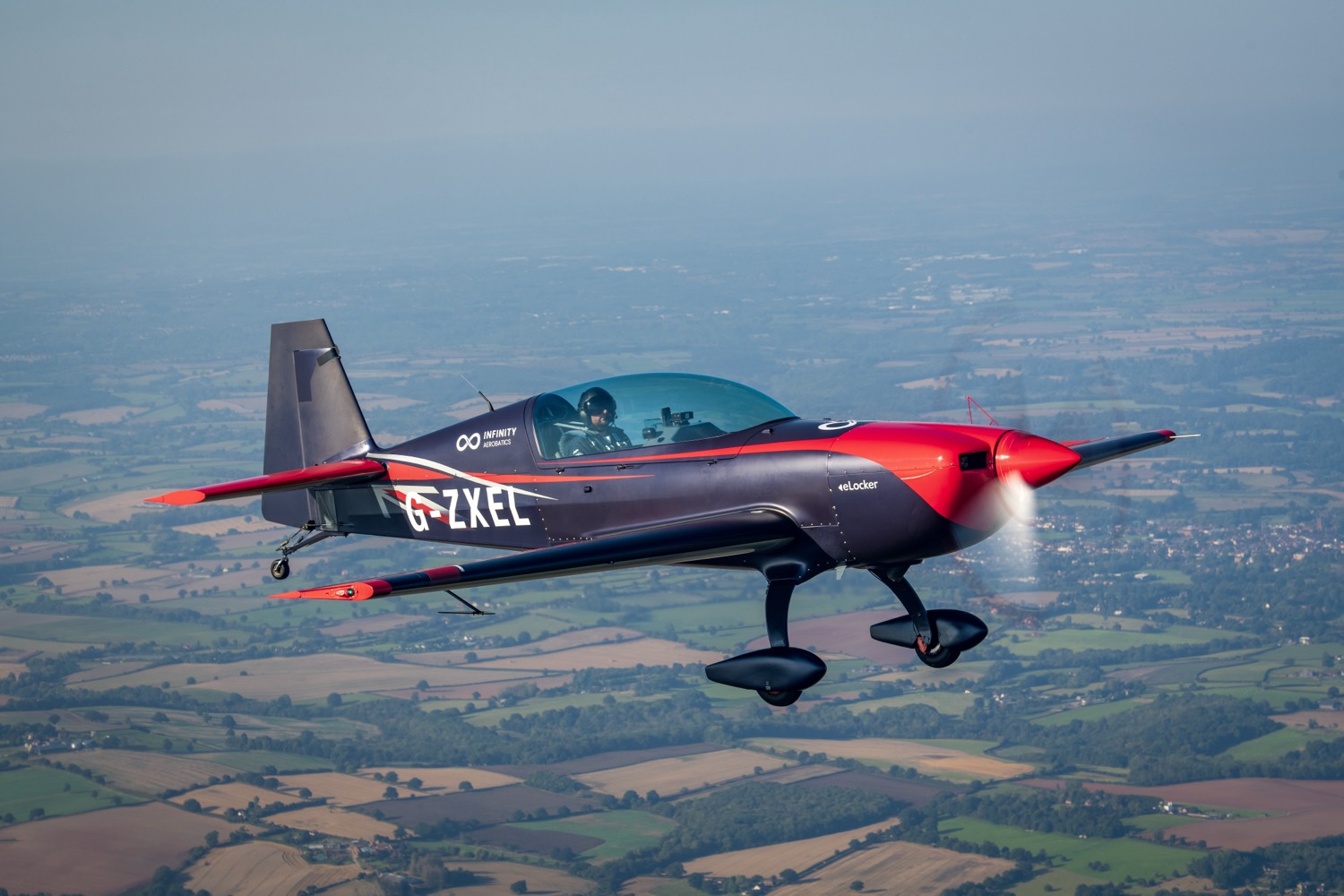
It is one of those things we have all seen a thousand times and rarely stop to question: how does something as heavy as an aeroplane simply lift off the ground and stay up? The answer is a beautiful balance of four forces. Once you understand it, every flight makes a little more sense.
The four forces
Every aircraft in flight is governed by a constant tug-of-war between four forces:
- Lift: the upward force created by the wings.
- Weight: gravity, pulling the aircraft down.
- Thrust: the forward force from the engine and propeller.
- Drag: air resistance, pulling the aircraft back.
To take off, an aircraft needs lift to exceed weight. To do that, it first needs enough thrust to overcome drag and accelerate down the runway. Everything about takeoff is about generating airflow fast enough over the wings.
Where lift comes from
As the aircraft accelerates, air flows over and under the wings. The wing’s shape and its angle of attack (the angle at which it meets the oncoming air) deflect that airflow downward. By Newton’s third law, pushing air down produces an equal and opposite push up on the wing. That upward push is lift.
The faster the air flows over the wing, the more lift it produces. This is why an aircraft must reach a certain speed, its rotation speed, before the pilot eases back on the controls and the nose lifts.
The moment of rotation
At rotation speed, the pilot raises the nose, increasing the wing’s angle of attack. Lift jumps, overtakes weight, and the aircraft flies. It really is that clean: enough speed, enough angle, and physics does the rest.
Why aerobatic aircraft are different
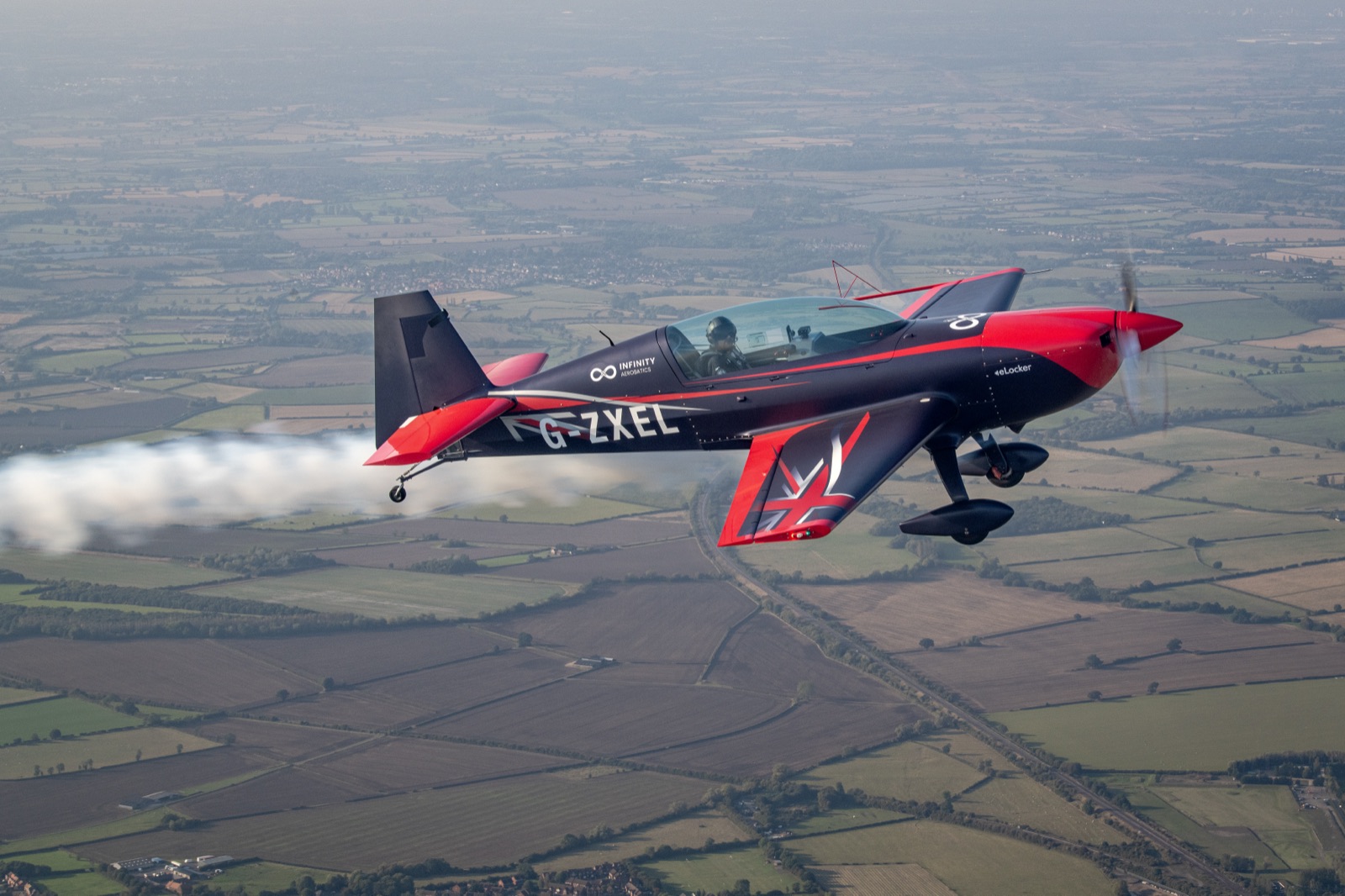
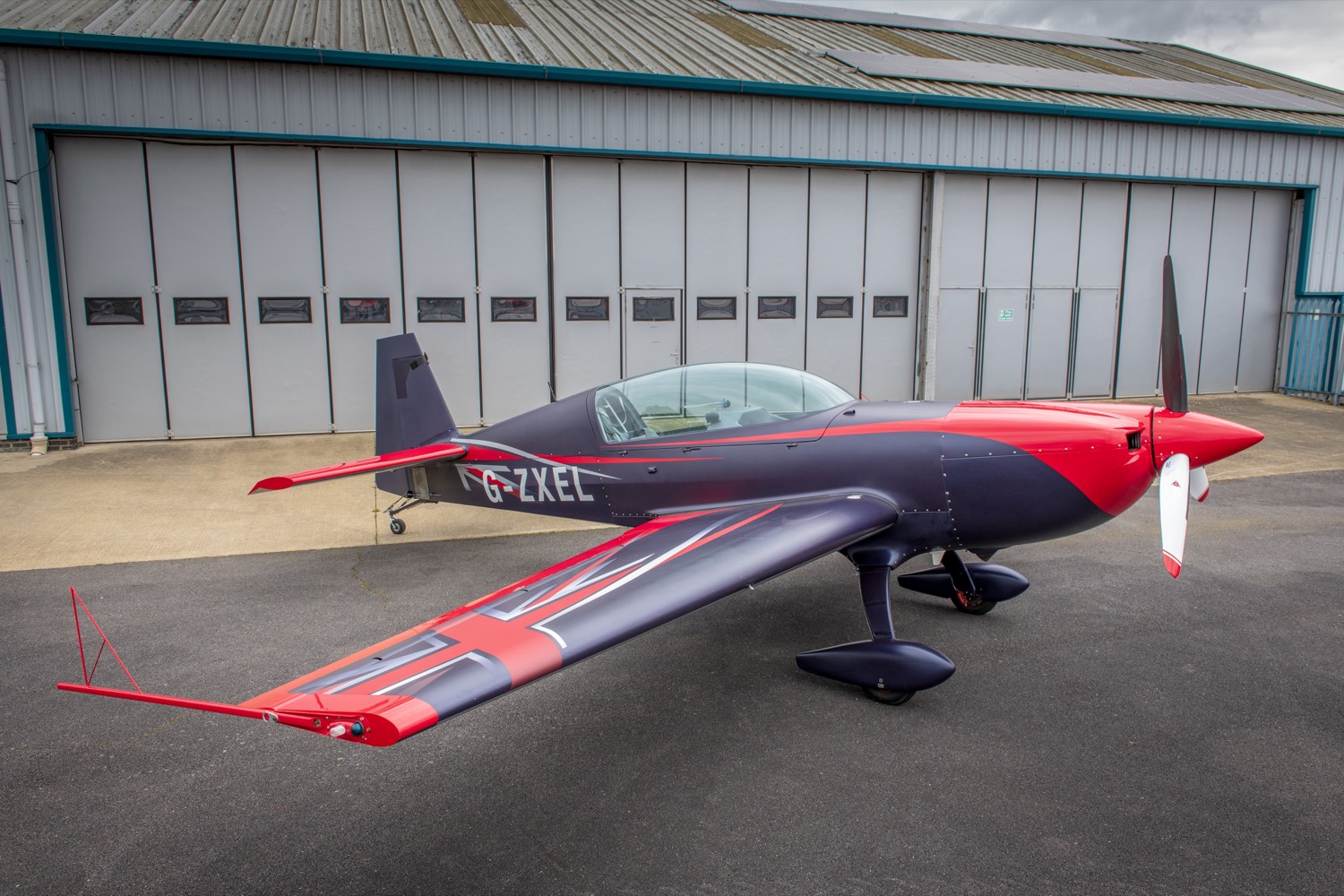
An Extra 300 takes off in a fraction of the runway a typical light aircraft needs. Its enormous power-to-weight ratio means it reaches rotation speed almost immediately, and its symmetrical wing generates strong lift at a wide range of angles, which is exactly what lets it perform vertical climbs, hammerheads and sustained inverted flight that ordinary aircraft simply cannot.
Understanding the forces is one thing. Feeling a 300 hp climb press you into your seat is quite another. Come and feel it →
Keep reading
 Aviation 101
How to Fly a Loop: The Manoeuvre, Step by Step
How to fly a loop, explained step by step: the entry, the pull, the float over the top, and what each moment feels like from the Extra 300.
 Aviation 101
Aerobatic Pilot Skills: What Makes a Great One
Spatial awareness, energy management, G-tolerance and calm under load: the real aerobatic pilot skills behind every loop, roll and hammerhead you will fly.