Formation Flying: The Skill Behind the Spectacle
Formation flying looks like magic from the ground. Here is the real skill behind it: the spacing, timing and trust that hold two aircraft as one.
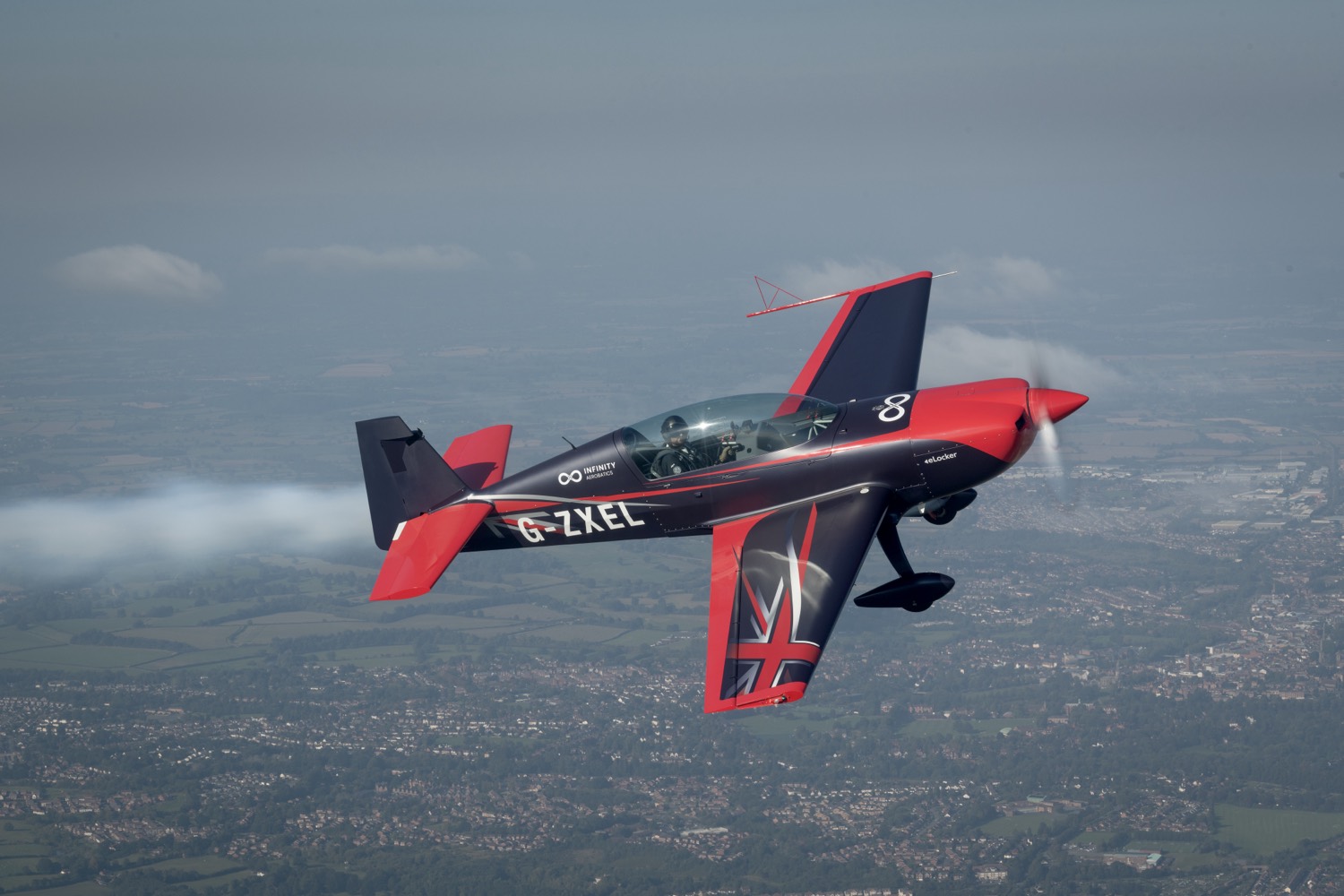
You have seen it at an airshow: two aircraft rolling together as if bolted to the same beam, wingtips a few feet apart, never wavering. It reads as spectacle, a stunt pulled off by nerve. It is not. Formation flying is one of the most controlled, precise disciplines in aviation, and once you learn what is actually happening up there, you stop watching the shape and start reading the skill. Here is how to see it properly.
What you are actually watching
Formation flying is two or more aircraft holding a fixed relationship to one another while they climb, roll and turn as a single unit. One aircraft leads. The others hold station off it, matching every move it makes.
The hard part is not the manoeuvre. It is the stillness. A wing pilot’s whole job is to make the aircraft next to them appear not to move at all: to sit in one spot in the sky while everything around it changes. When it is done well, it looks effortless, and that effortlessness is the entire point.
So the next time a pair of Extras sweeps past, watch the gap between them. If it never changes, you are watching real skill.
Why is formation flying so difficult?
Because nothing stays still. The lead aircraft is constantly climbing, banking or accelerating, and the wingman has to answer each of those changes before the gap opens or closes.
That means dozens of tiny corrections a minute (a whisper of aileron, a breath of throttle), none of them large enough to see from the ground. The pilot is not staring at their instruments. They are flying by eye, holding a reference point on the lead aircraft and keeping it pinned exactly where it should be.
Get it right and the formation looks carved from a single block. Get lazy for a second and the whole picture wobbles.
The conversation you cannot hear
From your seat on the grass it looks silent and serene. Inside, it is a conversation, just a very disciplined one.
Formation runs on clear, minimal communication: standard radio calls, hand signals, and a shared brief agreed on the ground before anyone starts an engine. Often the best formations are the quietest. Once the plan is set, the pilots need barely a word, because they already know what comes next.
Trust does the rest. You are flying a few feet from someone at speed, which only works if you have no doubt about their competence and they have none about yours. That trust is not bravado. It is built on the ground, in the briefing room, long before the wheels leave it.
Who leads, who follows
Every formation has two roles, and both are demanding in different ways.
- The leader flies for everyone. Smooth, predictable inputs (no sudden moves), so the wing pilots always have a fair chance of holding position. A good lead makes their formation look good.
- The wingman flies relative to the leader, not the horizon. Their eyes stay on the lead aircraft, their focus absolute, matching its every move without ever glancing away.
Watch a display closely and you can pick out who is doing which job. The leader carries the shape through the sky. The wing keeps it honest.
Where you see it done best
Formation flying is the backbone of the great display teams (the Red Arrows, the Blue Angels, the Thunderbirds) and of countless ceremonial flypasts. The synchronised loops and rolls that draw the loudest cheers are only possible because every pilot in the group can hold a slot to within inches.
There is history in it, too. The discipline grew out of military flying, where holding tight, coordinated positions had real tactical value. What began as a matter of survival became, in the right hands, one of the most graceful things you can do with an aeroplane.
From watching to understanding
Here is the quiet reward of learning what formation asks of a pilot: you never watch it the same way again. The gap you now know is held to inches. The stillness you know is a hundred corrections a minute. The silence you know is a conversation rehearsed on the ground.
And if watching turns into wanting to try, the door is open. Get comfortable with what an Extra 300 does in your hands with one of our experience flights, then read our guide to formation flying training for how the skill itself is built, step by step.
Formation flying only looks like a stunt. Learn the craft beneath it and you will see what it really is: precision, timing and trust, flown as one.
Keep reading
 Formation
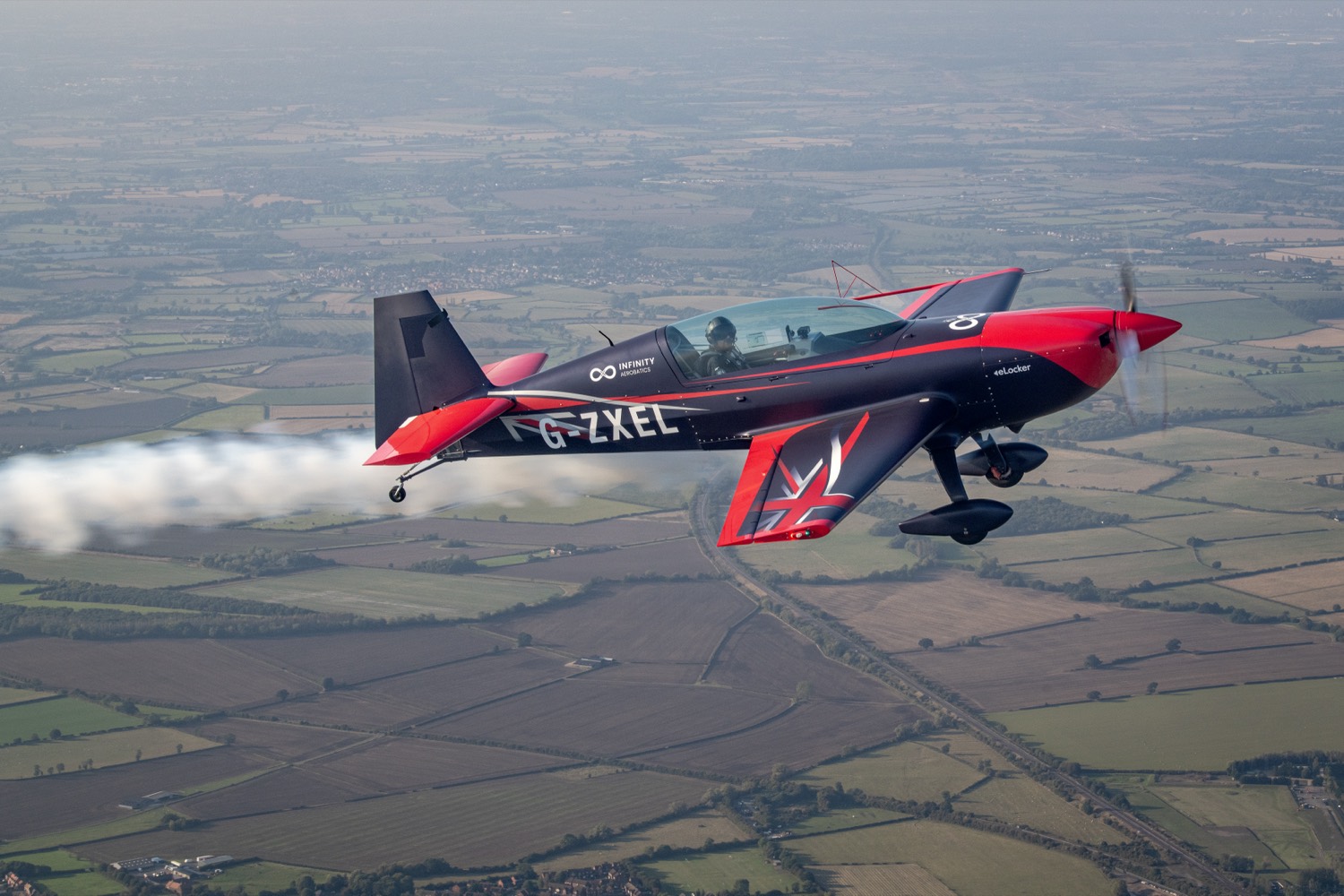
Formation Flying Training: How the Skill Is Built
What formation flying training really teaches: holding position to the foot, reading another aircraft by eye, and the discipline behind flying as one.
 Formation
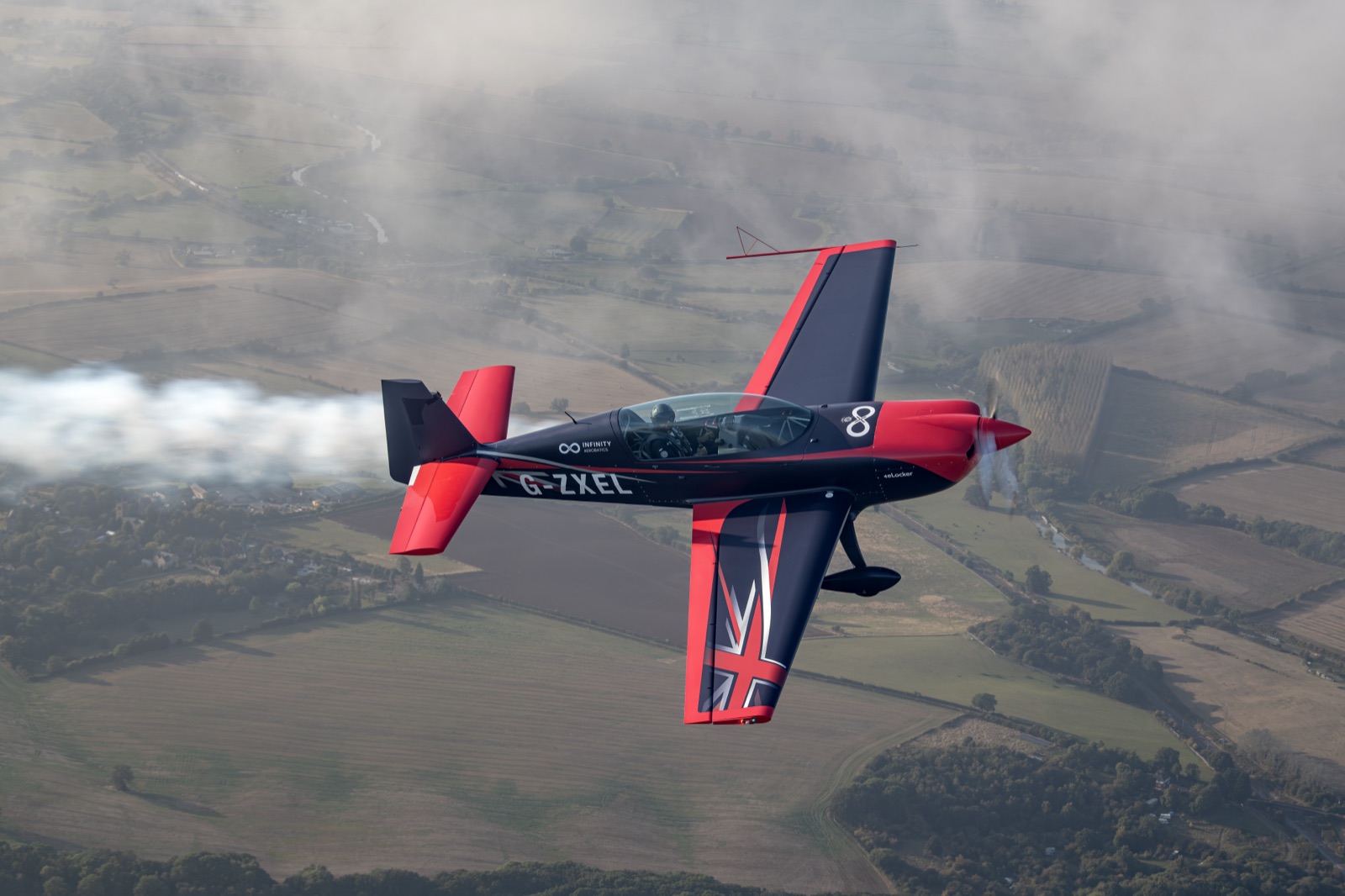
Formation Flying: A Warm Welcome for New Pilots
Curious about formation flying? Here is how it works, what it feels like to fly a few feet from another aircraft, and how a first-timer joins in at Infinity.