First Aerobatic Flight: What to Think About First
Weighing up your first aerobatic flight? Health, what to wear, choosing the right operator and setting your expectations: the honest checklist before you book.
Before you book your first aerobatic flight, it is worth a few quiet minutes thinking it through. Not to talk yourself out of it, but to walk in ready. A little forethought about your health, what you wear, and who you fly with turns a big unknown into the best hour of your year. Here is the honest checklist to run before you commit.
Are you fit enough to fly aerobatics?
You do not need to be an athlete. Aerobatics is far gentler on the body than most people fear, and your pilot dials the intensity to you. But a handful of conditions are worth being straight with yourself about first.
- Back or neck problems: the forces in a manoeuvre load your spine, so an existing issue can be aggravated.
- High blood pressure or a heart condition: best cleared with your GP before you go anywhere near a cockpit.
- Motion sickness or a tendency to feel claustrophobic: not automatic dealbreakers, but say so when you book, so your pilot can plan a gentler sequence.
- Height and weight: the cockpit and harness have sensible limits; a quick call confirms you are within them.
If anything on that list gives you pause, ask your doctor. A good operator would far rather you checked than pushed through. None of this is meant to put you off. Most people are perfectly fine. It is simply the grown-up part of a genuinely thrilling day.
What should you wear?
Keep it simple and comfortable. Soft trousers or something you can move freely in, and flat, soft-soled shoes: no heels, no heavy boots. Leave the loose jewellery and anything that might rattle around the cockpit at home.
You do not need to kit yourself out. The flight suit, parachute and headset are provided, so dress for comfort on the ground and let the gear do the rest.
How do you choose the right operator?
This is the decision that matters most, and it is worth more than a price comparison. Cheapest is the wrong question. Look for the things that quietly tell you an operator takes the flying seriously:
- A proper pre-flight briefing: not a rushed hello, but a real walk-through of the aircraft, the safety kit and how you talk to your pilot in the air.
- A professional pilot with the licences and hours to match, flying an aircraft built and maintained for aerobatics.
- Honest reviews from people who have actually flown with them.
- Emergency equipment, including a parachute, and someone who takes the time to show you how it works.
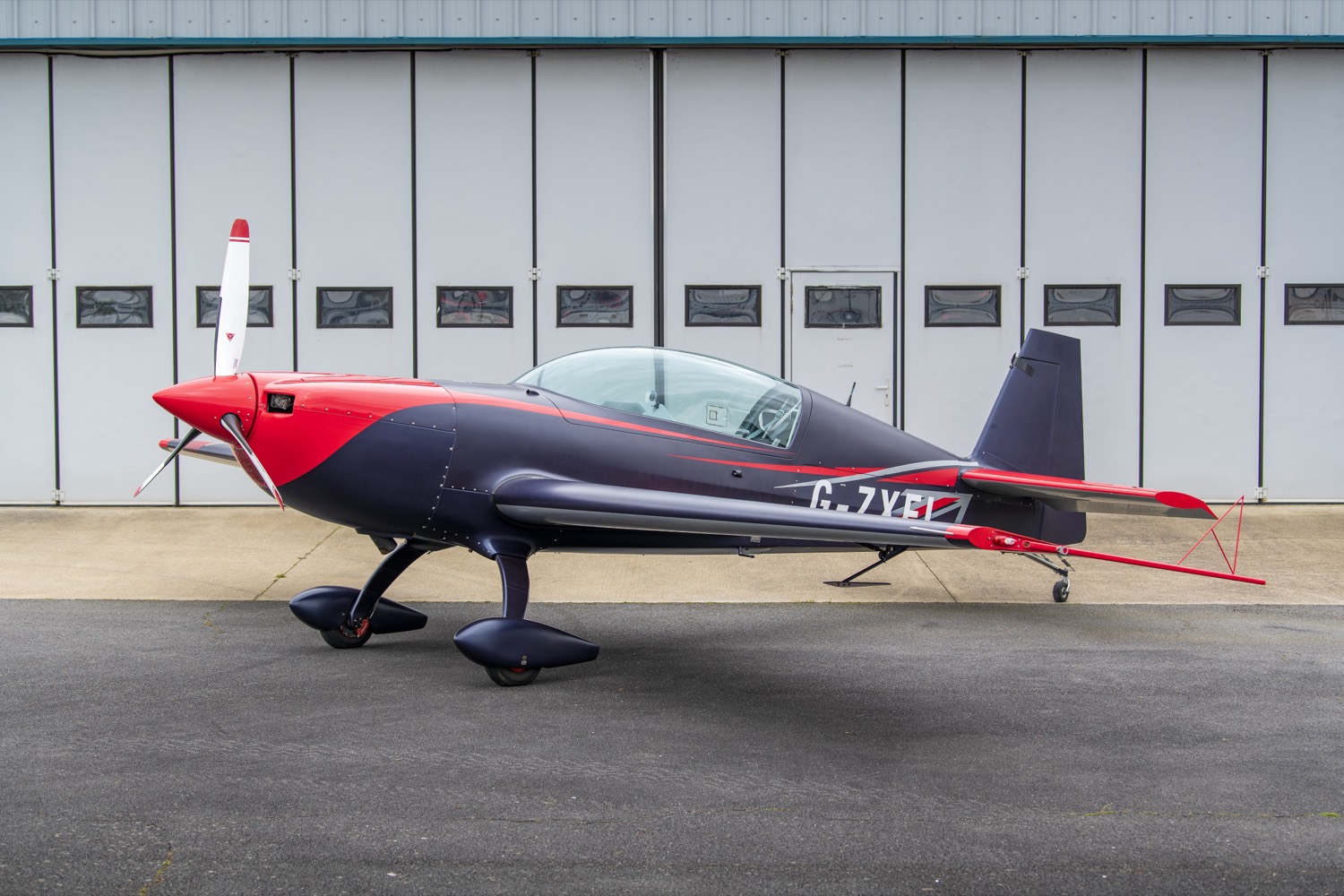
We fly the Extra 300 (a two-seat aerobatic aircraft with a symmetrical wing that is as happy inverted as upright) precisely because it lets a first-timer feel completely secure while there is a professional in the back seat doing the flying. The aircraft matters. So does the person you trust to fly it.
Set your expectations before you go
Half the nerves people carry come from not knowing what the hour actually holds. So picture it honestly. You will feel positive G press you into the seat, which is more natural than it sounds. You will likely see the horizon roll all the way around. And at some point you will probably laugh out loud without meaning to.
You are also in charge of the throttle on intensity. Want more? Say so. Want a breather? Say that too, and your pilot eases off. Nobody is out to frighten you. The point is the grin, not the ordeal.
If you want a minute-by-minute sense of the day, our guide to what actually happens up there on your first aerobatic flight walks you through it from the brief to the landing.
How can you prepare on the day?
The small stuff makes a real difference. Arrive rested and lightly fed: a normal meal a couple of hours before, not a heavy fry-up ten minutes prior. Go easy on the coffee. Then listen to your briefing properly and fly the plan you agreed together.
The single most important habit in the air is communication. If a manoeuvre feels like too much, tell your pilot. That is not failing, it is flying well. For the finer points, our five things every first-timer should do to prepare covers the details worth knowing before you strap in.
One last thing you cannot control: the weather. Aerobatics wants good, stable conditions, so a well-run operator will happily rebook you rather than fly you in marginal air. Take that as a good sign, not an inconvenience.
Think it through, pick your operator with care, and turn up ready. That is genuinely all it takes. The rest is the best surprise you will have all year.
Book your first aerobatic flight → · or give one as an aerobatic flight gift voucher.
Keep reading
 First Timers
Can Anyone Fly Aerobatics? Age, Weight, Health and Nerves, Explained
Aerobatic flight age limit, weight, health and nerves, honestly explained. Most people can fly, no experience needed; check size or medical concerns with us first.
 First Timers
Your First Aerobatic Flight: What Actually Happens Up There
Nervous? Excited? Both? Here is an honest, minute-by-minute guide to your first flight in the Extra 300, from the pre-flight brief to that first inverted grin.