Your First Aerobatic Flight: What Actually Happens Up There
Nervous? Excited? Both? Here is an honest, minute-by-minute guide to your first flight in the Extra 300, from the pre-flight brief to that first inverted grin.
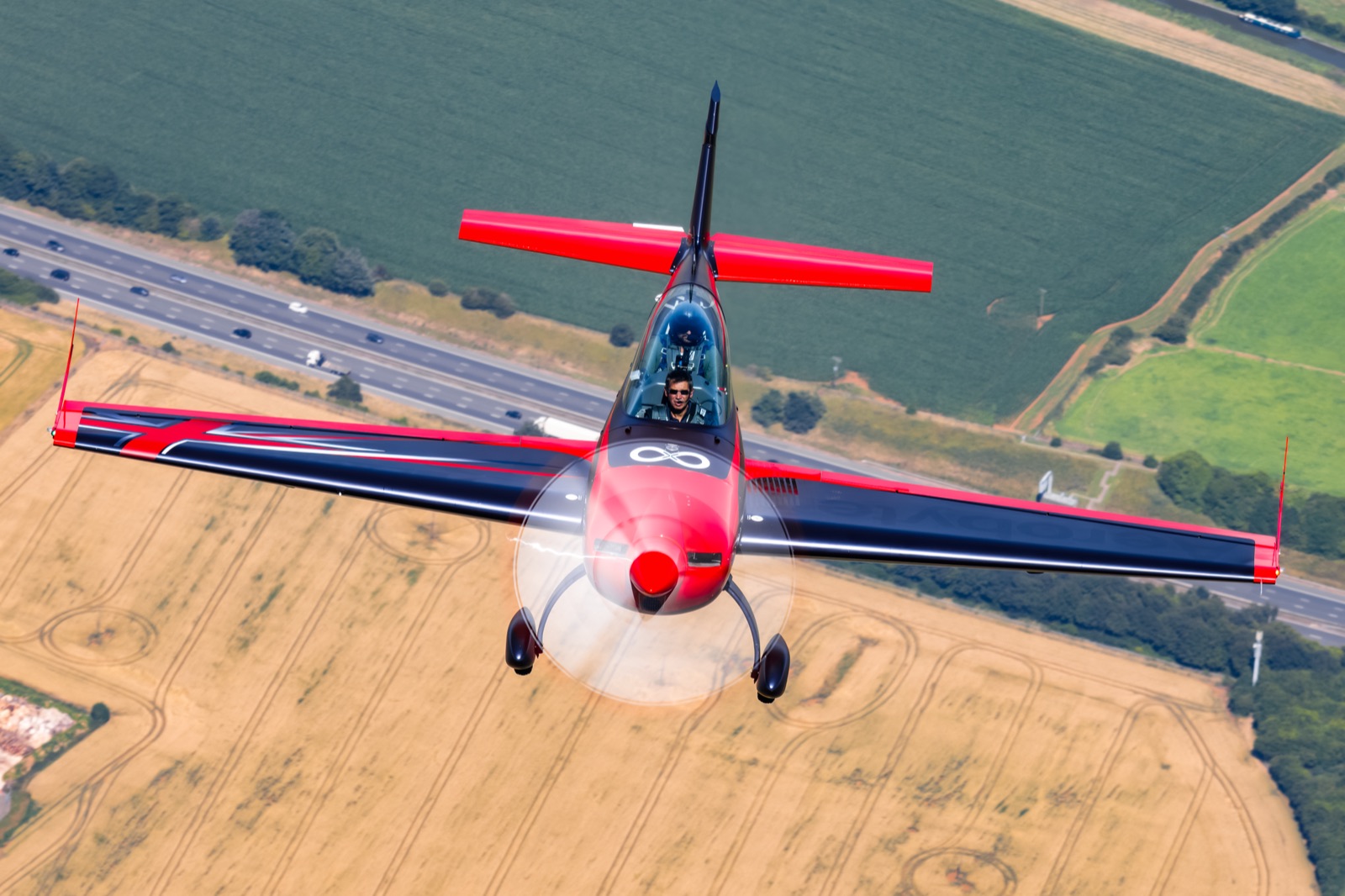
So you have booked your first aerobatic flight (or you are about to) and your brain is somewhere between “this is going to be incredible” and “what have I done?” Good. That is exactly the right place to be. Here is precisely what the day looks like, so the only surprise left is how much you love it.
Before you fly
Aerobatics is 90% confidence and 10% inner ear. The single best thing you can do is arrive hydrated, rested and lightly fed: a normal breakfast a couple of hours before, not a fry-up ten minutes before. Skip the extra coffee. Wear comfortable clothes and soft-soled shoes; we provide the flight suit, parachute and headset.
When you land at Little Staughton, you will be met, offered a drink, and walked through the whole sequence before you go anywhere near the aircraft. Nothing that happens in the air will be a mystery. Your pilot will describe every manoeuvre and, crucially, what your body will feel during each one.
The walk-around
You will meet the Extra 300 up close, and there is a reason we do this before you fly. Seeing an aircraft stressed to +10/−10 g, kept to competition standard, and watched over by your pilot as they check it does more for the nerves than any pep talk. Take photos while you are there. She earns them.
The first climb
Takeoff in an Extra is brisk: 300 horsepower in a 950 kg aircraft climbs like nothing you have flown in commercially. We climb to a safe height with plenty of air beneath us. This is your moment to breathe, look at the horizon, and settle.
The manoeuvres
The part that surprises most people: positive G feels far more natural than you would guess. Pull into a loop and you feel heavy and planted, much like a fast fairground ride but smoother and more predictable. Your pilot builds it up gradually:
- A gentle wingover to get you used to the horizon moving
- A loop: up, over the top, and the world rolls back into place
- An aileron roll: the horizon spins once around you
- And, if you are grinning by now (you will be), we go further
The first time the horizon goes past vertical, most people laugh out loud. It is involuntary. It is the best sound in aviation.
About that G-force
You will feel up to around +4g on a first flight: four times your body weight pressing you into the seat. The trick your pilot will teach you is simple: tense your legs and stomach, breathe in short sharp breaths, and never hold your breath. Negative G (the floating, upside-down sensation) is used sparingly on a first flight. If at any point you want a break, you say so, and we ease off. You are always in control of the intensity.
Back on the ground
Wheels down, taxi in, and the adrenaline gives way to the widest grin of your year. There is tea, cake, a certificate, and your cockpit video arrives within seven days so you can prove to everyone that yes, you really were upside down over Bedfordshire.
Ready? Book your experience →, or give one as an aerobatic flight gift voucher.
Keep reading
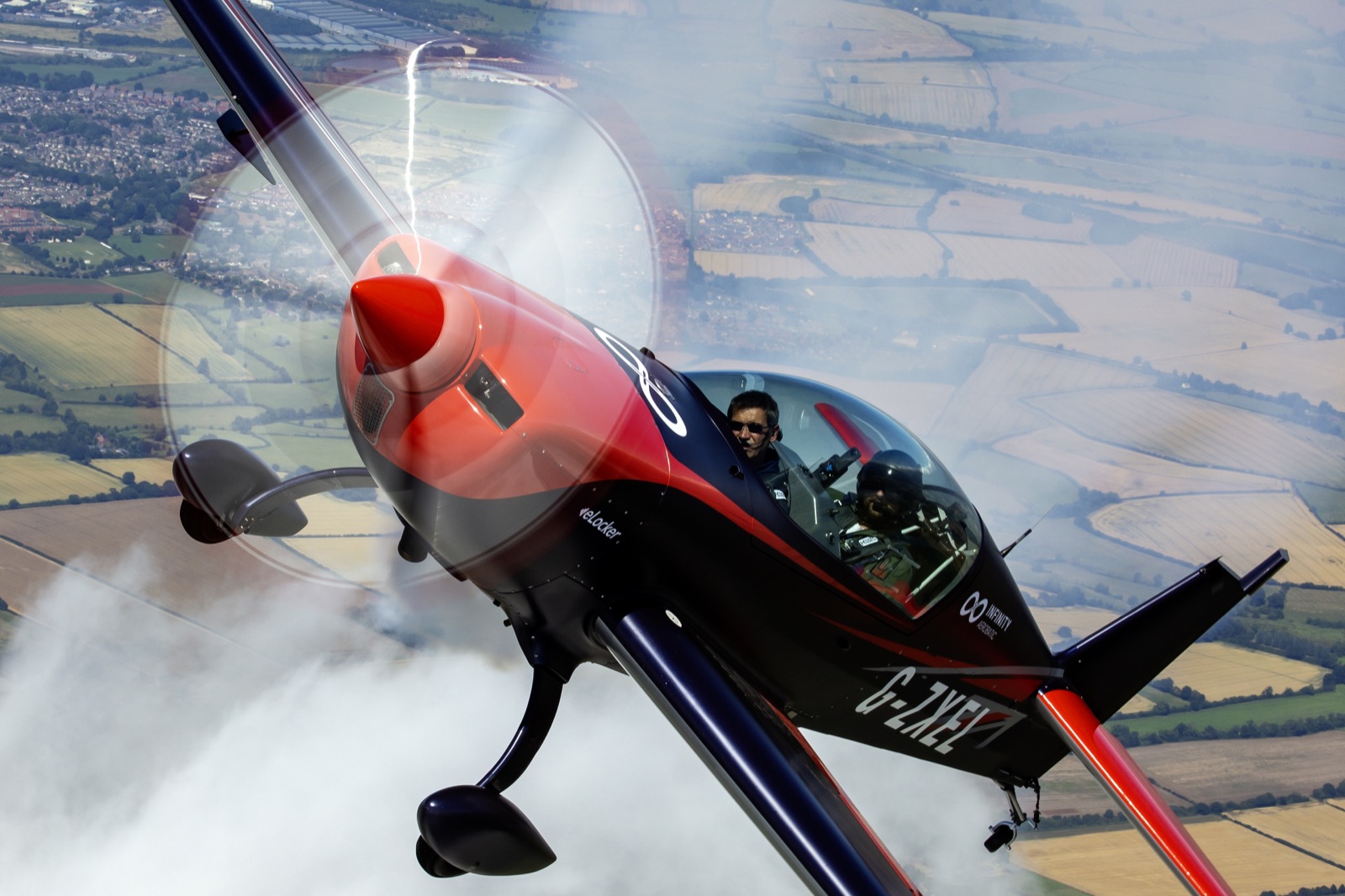 First Timers
Can Anyone Fly Aerobatics? Age, Weight, Health and Nerves, Explained
Aerobatic flight age limit, weight, health and nerves, honestly explained. Most people can fly, no experience needed; check size or medical concerns with us first.
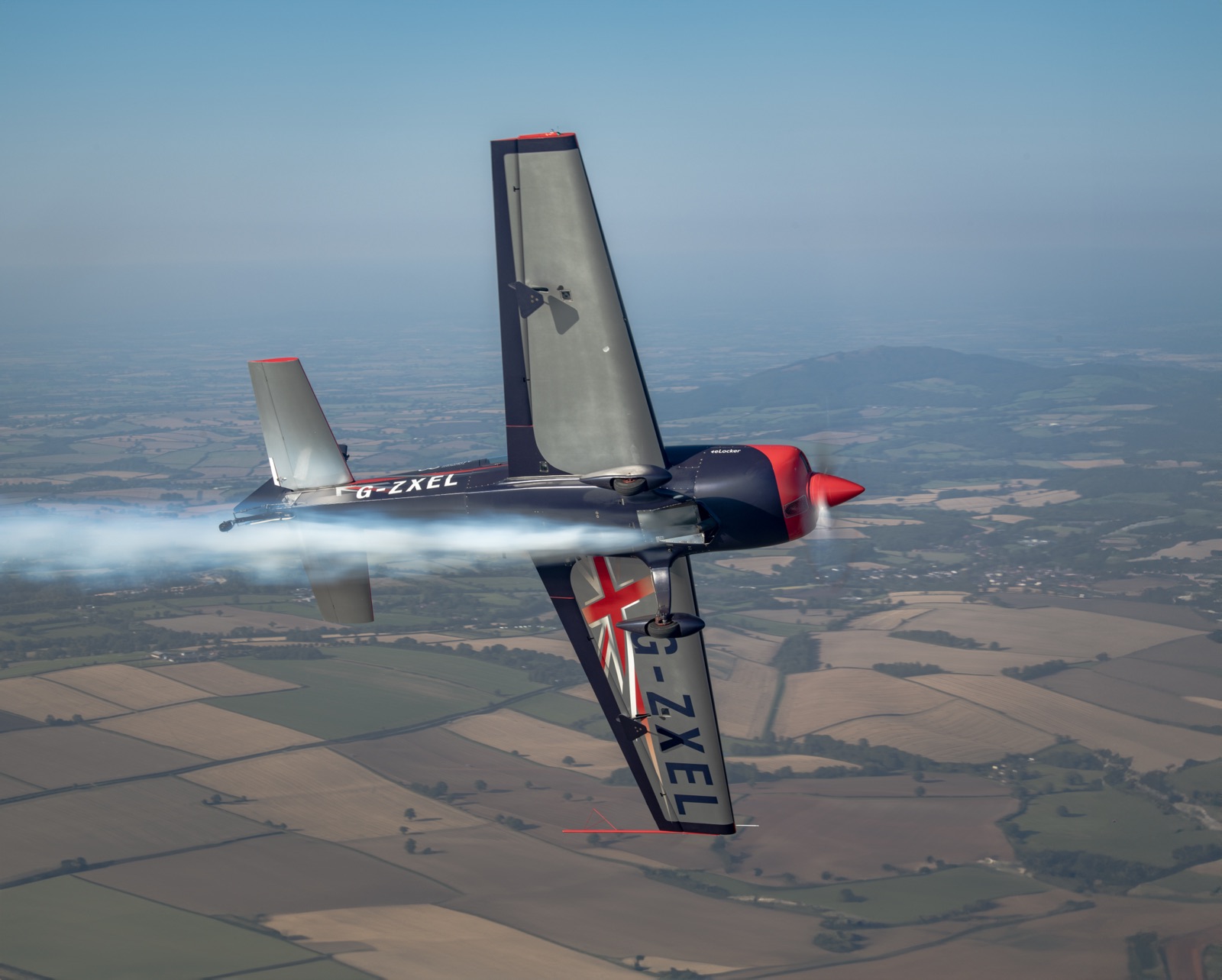 First Timers
8 Aerobatic Manoeuvres Every First-Timer Should Try
Loops, rolls, hammerheads and the glorious half-Cuban: a plain-English tour of the figures you will fly on your first aerobatic experience, and what each one feels like.