Extra 300 Aerobatics: What Makes It Excel
The symmetrical wing, the roll rate, the power: the design traits that make Extra 300 aerobatics feel effortless, explained for the enthusiast in you.
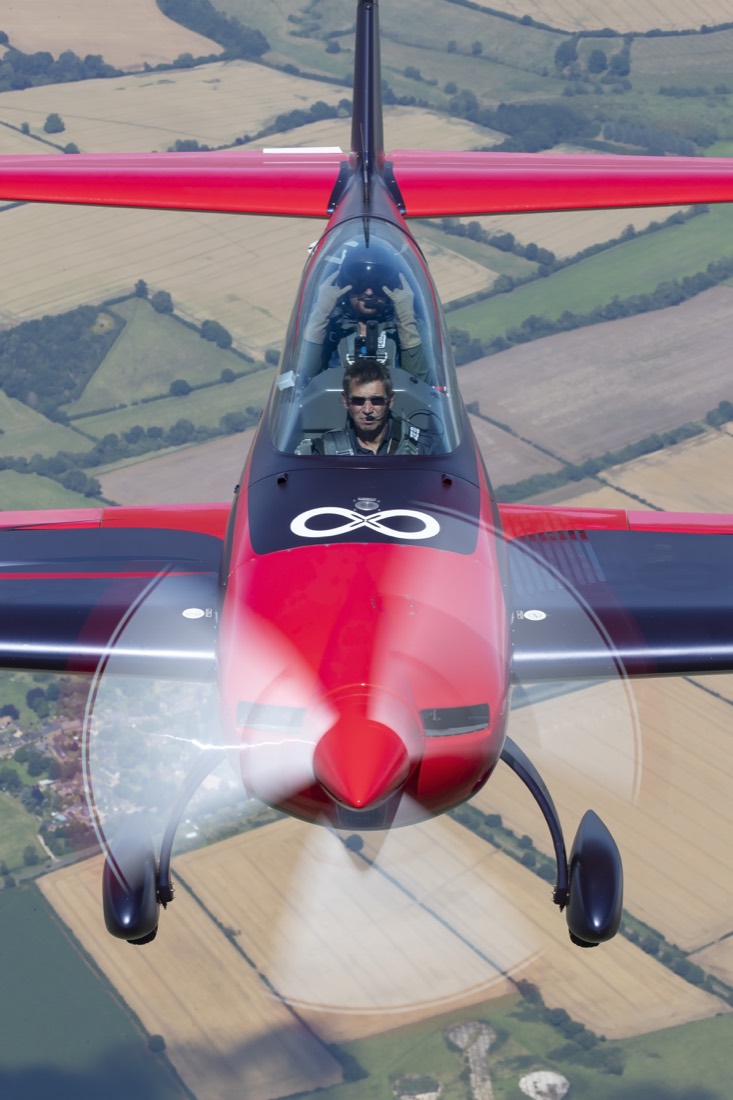
Watch an aerobatic sequence flown well and it looks easy: the aircraft flicks from upright to inverted and back as if the sky had no rules. A lot of that ease is the pilot. A lot of it is the aeroplane. In Extra 300 aerobatics, the aircraft is doing far more of the work than it lets on, and once you understand how, you watch a display differently.
This is the enthusiast’s tour of why the Extra 300 flies the way it does. If you want the love letter instead, we wrote that separately: why the Extra 300 is the greatest aerobatic aircraft ever built. This one is about the engineering.
A wing that treats up and down the same
Most aeroplanes are built to fly one way up. Their wing is curved on top and flatter underneath, so it makes lift in a single direction and resents being rolled inverted.
The Extra 300 uses a symmetrical aerofoil, a mirror image top and bottom. Neither surface is the “right” one. That single design choice is the foundation of everything the aircraft does well: sustained inverted flight, outside loops, knife-edge, and long inverted lines all become natural rather than a fight against the wing.
For the passenger, it means the upside-down half of a manoeuvre feels as planted and controlled as the upright half. Nothing about inverted flight is borrowed or improvised. The wing simply does not care which way is up.
Why does the Extra 300 roll so fast?
The trait most people notice first is the roll rate. The Extra rolls quickly and crisply, and it does it because of oversized ailerons that run most of the span of the wing.
Big control surfaces plus a light airframe give you a response that feels almost telepathic: you think about rolling and the horizon is already moving. In practice this does two things:
- Precision. A fast, linear roll is easy to stop exactly where you want it, which is what competition scoring rewards.
- Comfort. Quick figures are over sooner, so there is less time spent loading your body and more time enjoying the picture.
That responsiveness is why the Extra 300 can string figures together so tightly, with barely a pause between one and the next.
Power that buys you the vertical
Aerobatics happens in the vertical as much as the horizontal, and the vertical is expensive: every climbing line trades speed for height. You want an aircraft that has energy to spare.
The Extra 300 pairs a lightweight composite-and-steel airframe with a powerful, fuel-injected Lycoming engine, and it carries an inverted oil system so the engine keeps running happily whichever way up you are. The result is a strong rate of climb and enough grunt to point the nose at the sky and keep going.
That surplus of energy is what lets a pilot fly clean, unhurried lines instead of scraping through each figure with nothing left over.
Control that rewards a light touch
Power and roll rate would be useless if the aircraft were twitchy or vague. The Extra’s controls are sensitive but honest: the ailerons, rudder and elevator all respond to small, deliberate inputs, so tiny corrections are possible in the middle of a demanding figure.
That is the quality pilots mean when they call an aircraft “connected”. It flows like handwriting: you stop thinking about the controls and start thinking about the shape you want to draw in the sky. It is also why the Extra suits a first-timer and a champion equally: the same precision that wins competitions is the same precision that keeps a nervous passenger feeling secure.
Is the Extra 300 safe to push?
Strength is the quiet trait behind all the showmanship. The Extra 300 is stressed to a design limit of +10 / −10 g, far beyond anything asked of it on an experience flight.
That margin is the point. When an airframe is engineered to survive roughly double what you will ever demand of it, the envelope you actually fly in is comfortable, predictable and forgiving. Add its composite construction and a design pedigree that traces back to Walter Extra’s first flights in the late 1980s, and you have an aircraft that has earned its place at the top of the sport.
Confidence in the machine is what lets a pilot fly to the edge of their own skill. It is what lets you, in the passenger seat, say “again” without a flicker of doubt.
None of this is magic. It is a symmetrical wing, honest controls, real power and a strong airframe, all pulling in the same direction. The best way to understand it is to feel it move.
Keep reading
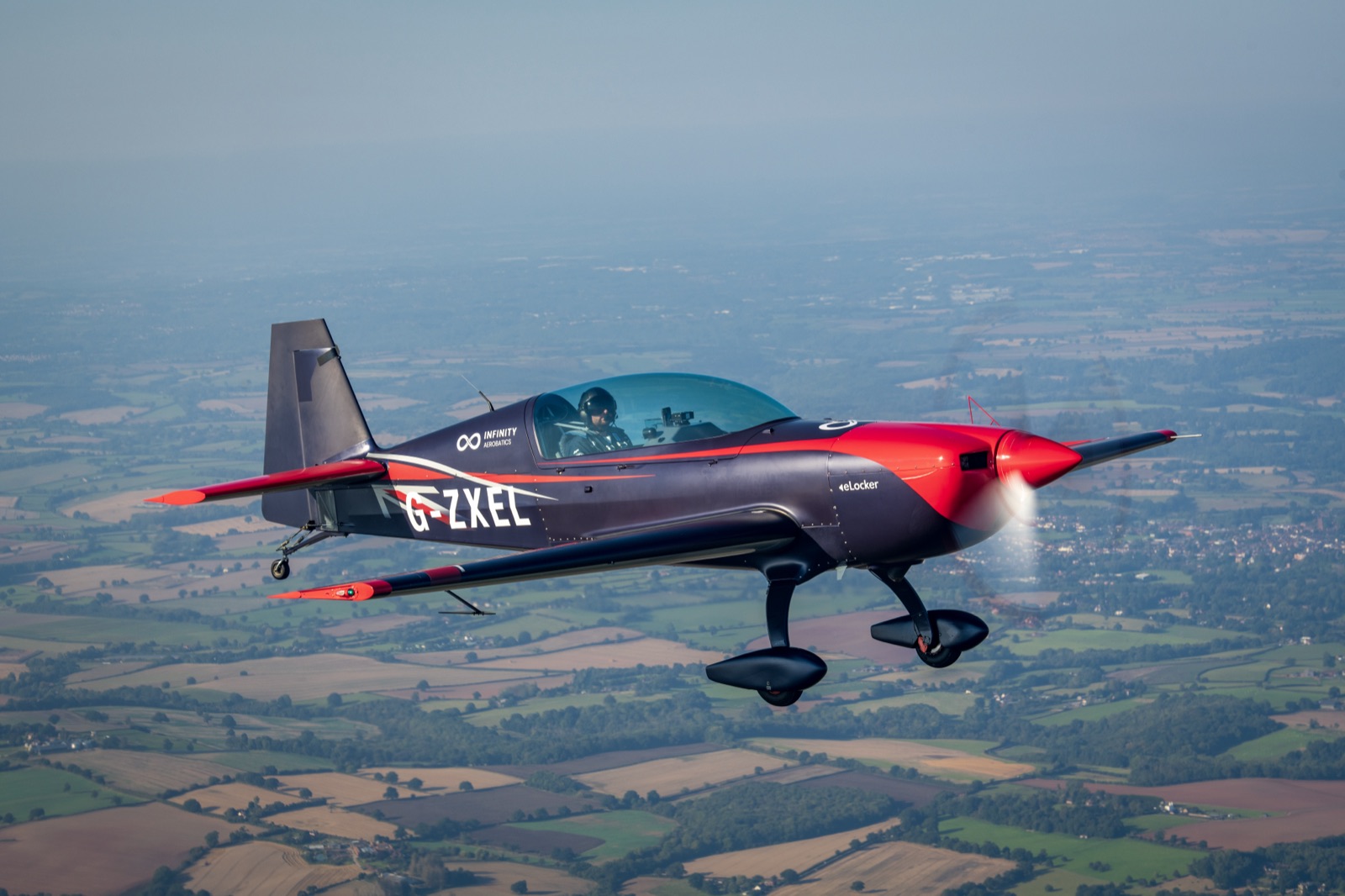 The Aircraft
Why the Extra 300 Is the Greatest Aerobatic Aircraft Ever Built
Roll rates that defy belief, a symmetrical wing that flies as happily inverted as upright, and a safety record that lets you push to the edge. An honest love letter to the Extra 300.
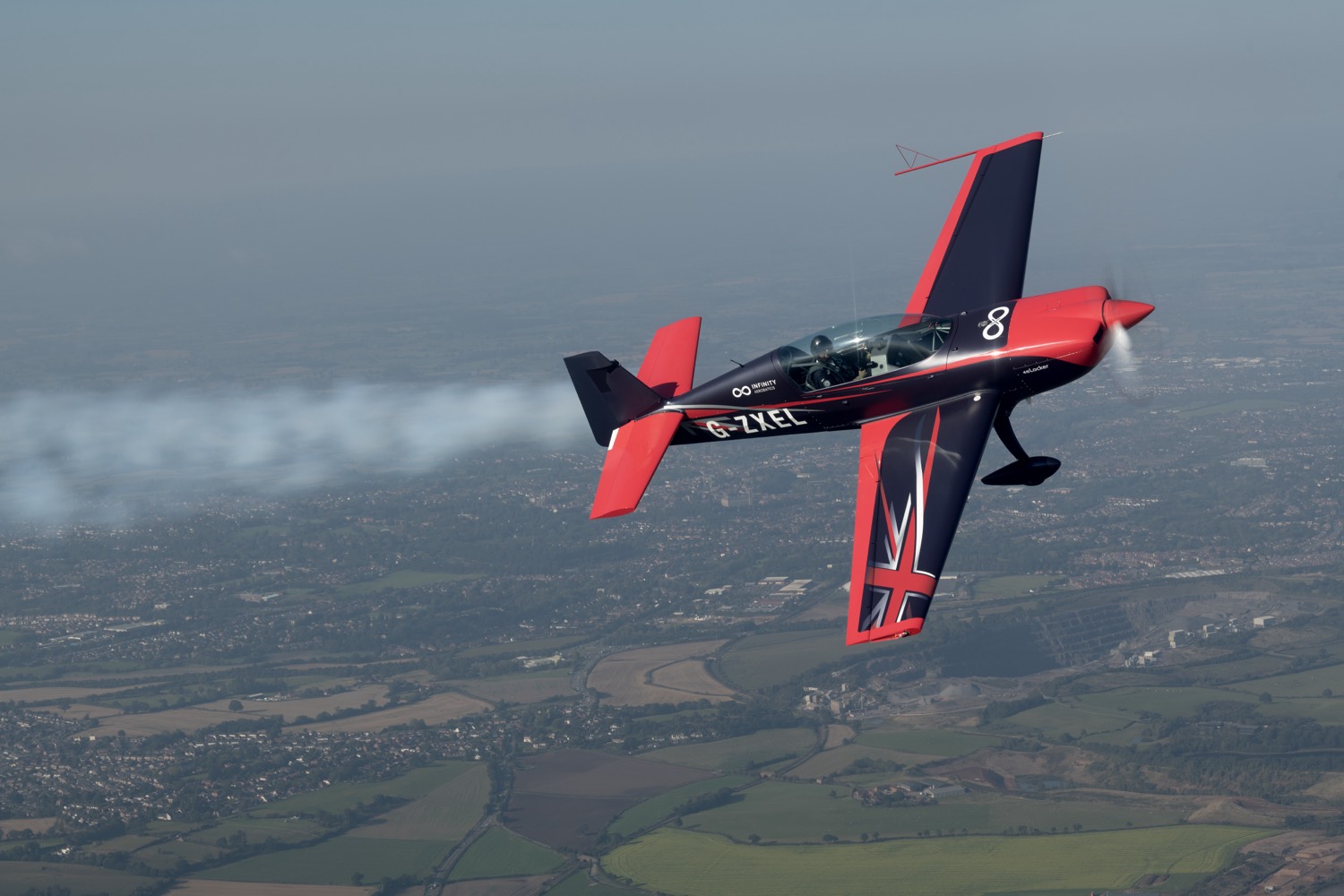 The Aircraft
Extra 300 Hire: The Practical Guide for Pilots
Thinking about Extra 300 hire? Who it suits, what you need to qualify, and how to fly one of the finest aerobatic aircraft, without the cost of owning it.