Competition Aerobatics Explained: A Beginner's Guide
How competition aerobatics actually works: the categories, the aerobatic box, how judges score every figure, and how pilots prepare. A clear, plain-English guide.
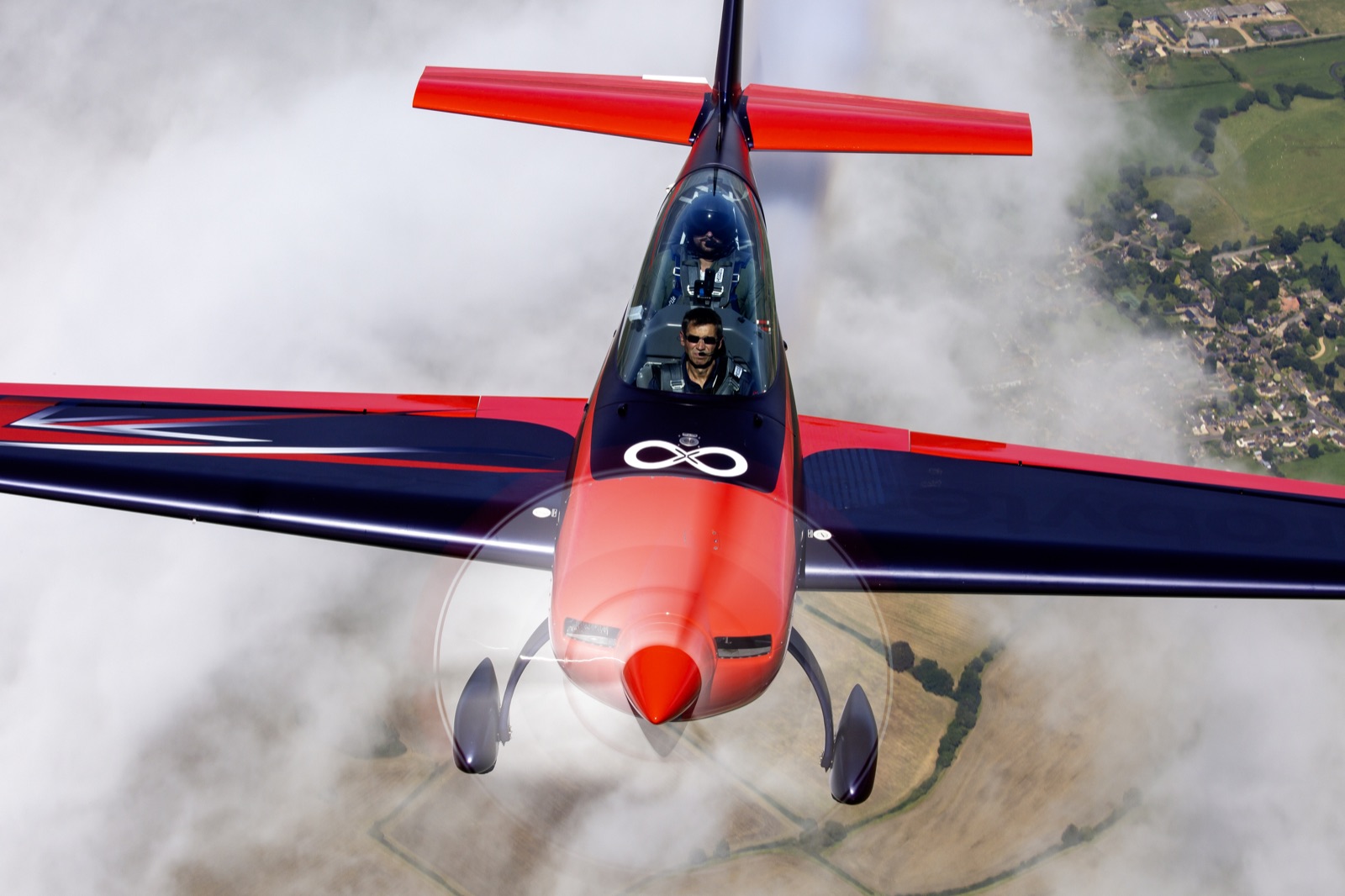
Watch a top pilot fly a sequence and it looks like pure instinct. It isn’t. Competition aerobatics is one of the most precise sports in the air: every line, corner and roll is measured against a perfect shape and marked out of ten by judges on the ground. Once you understand what they are looking for, a display stops being a blur and starts to read like a language. Here is how the whole thing works.
What is competition aerobatics?
At its heart, competition aerobatics is the art of flying figures (loops, rolls, hammerheads, spins) as accurately as humanly possible. A loop should be a perfect circle. A vertical line should be dead vertical. A roll should stop exactly on the point. Pilots fly a set sequence of these figures back to back, and judges score each one on how closely it matches the ideal.
It is a demanding, addictive discipline, and it is where a lot of the manoeuvres you would fly on an experience flight come from. If you want to see the raw ingredients first, our tour of the must-try aerobatic manoeuvres is a good place to start.
The categories, from Primary to Unlimited
Aerobatic competition is tiered so pilots can start gently and climb as their skill grows. The ladder runs, roughly, like this:
- Primary: the entry level, with simple figures and gentle energy
- Sportsman: a step up in complexity, still very accessible
- Intermediate: faster, tighter, more demanding sequences
- Advanced: high-energy flying that asks a lot of both pilot and aircraft
- Unlimited: the top of the sport, where the figures push the limits of what is possible
Each category sets which figures are allowed and how hard they can be. The idea is simple and fair: you are always flying against people at your own level.
Known, Unknown and Free sequences
Most competitions ask pilots to fly more than one kind of sequence, and each tests something different:
- Known sequences are published well in advance, so pilots can drill them until every move is second nature.
- Unknown sequences are handed out shortly before the event with no chance to practise, testing how well a pilot can plan and fly a routine cold.
- Free sequences are designed by the pilots themselves, within the category’s rules, to show off their strengths and style.
Together they reward both meticulous preparation and the ability to think on the spot.
How does aerobatic judging work?
Judging happens from the ground. A panel of judges (usually experienced aerobatic pilots themselves) watches every figure and scores it out of ten, then deductions come off for any error they see.
They are marking things like:
- Precision: how closely the figure matches its ideal shape. A wobble in a line, an over- or under-rotated roll, a loop that bulges at the top all cost points.
- Presentation: how well the pilot places the sequence in front of the judges and keeps it centred and readable.
- Harmony: the flow and grace with which one figure links into the next.
The reason a display can look effortless is that the pilot is hiding an enormous amount of correction. Crisp rolls, clean vertical lines, symmetrical loops: the judges are trained to spot the smallest deviation, so there is nowhere to hide.
The aerobatic box
Every sequence has to be flown inside an invisible cube of sky called the aerobatic box. It is a defined block of airspace with set width, depth and upper and lower limits, marked out on the ground so pilots can see its edges.
Stray outside the box and you lose points; drop below the floor and it is treated as a serious safety break. The box is what keeps the flying safe, watchable and fair. Staying inside it while flying flat out is a real skill in itself.
How pilots prepare
Behind every clean sequence is a lot of unglamorous groundwork. Preparation tends to come in three strands:
- Physical. Aerobatic flying loads the body with repeated G, so pilots keep their fitness up and pay attention to sleep, food and hydration before they fly.
- Mental. Many pilots rehearse sequences on the ground through visualisation, walking or “dancing” the routine with their hands until the order and timing are automatic.
- Technical. The aircraft has to be competition-ready and thoroughly checked, and the sequence itself is flown again and again (in the air and on simulators) until nothing is left to chance.
The best competitors will tell you the same thing: consistency wins. Fly the same accurate figure every time, take the feedback from coaches and judges, and refine.
Understanding the rules is one thing. Feeling a loop and a roll for yourself is quite another, and it is the fastest way to see why pilots fall for this sport.
Keep reading
 First Timers
Can Anyone Fly Aerobatics? Age, Weight, Health and Nerves, Explained
Aerobatic flight age limit, weight, health and nerves, honestly explained. Most people can fly, no experience needed; check size or medical concerns with us first.
 Gifts
GiftsThe Bucket-List Gift That Beats Another Jumper: An Aerobatic Flight Experience
An Extra 300 aerobatic flight gift voucher for £299: valid 12 months, open-dated, PDF in minutes. A bucket-list gift the recipient flies when it suits them.